Do I Need a Mobile Bar Trailer? | Rig vs. Satellite Bar
Feb 19, 2026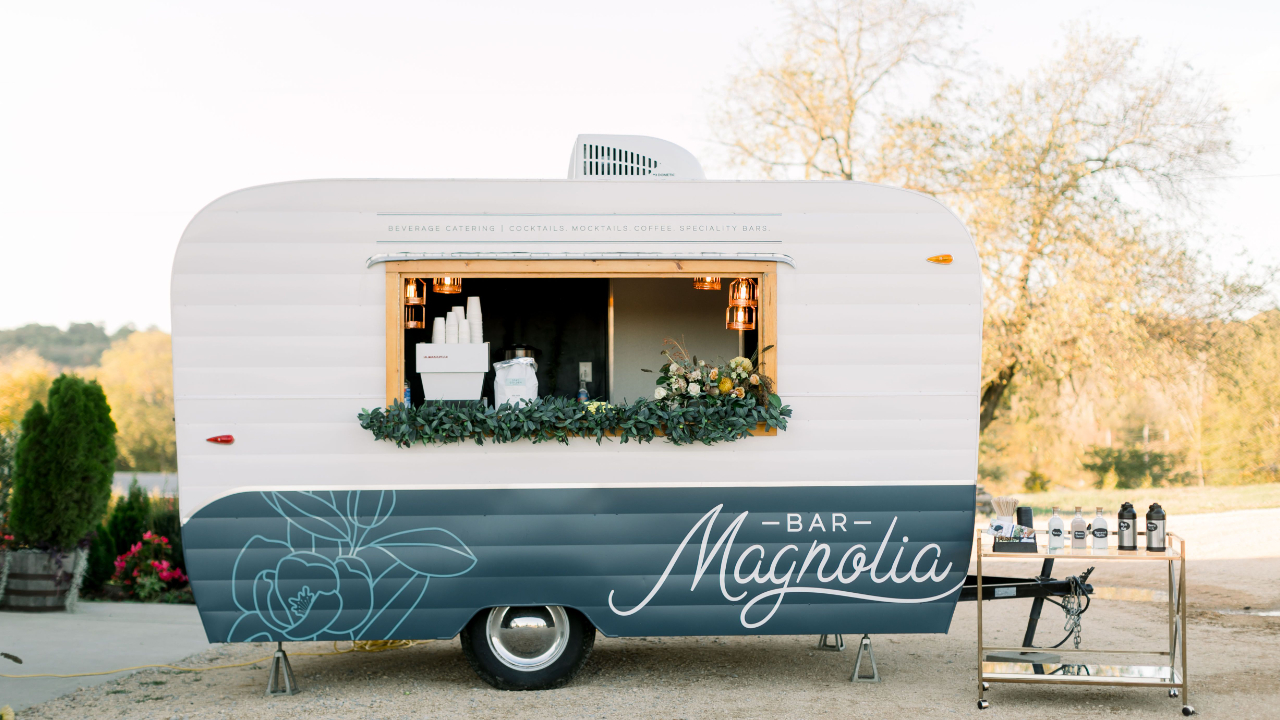
No, you do not need a mobile bar trailer to start a mobile bar business — and in most cases, buying or building a rig before you've started booking events is one of the most expensive mistakes you can make.
The most successful mobile bar companies we've worked with at Mobile Bev. Pros, including those generating multiple six figures and even seven figures in revenue, either don't have a rig at all or didn't purchase one until years after they started. Your rig is not your business. Your business is your brand, your network, your service, and your ability to get booked. A rig is a tool — and an expensive, underutilized one at that.
If you've been researching mobile bar trailers — horse trailer conversions, Piaggio Apes, Airstreams, custom builds — you've probably noticed that the loudest voices online are trailer manufacturers and builders who have an obvious financial incentive to sell you one. This post comes from the other side: operators who've owned rigs, run businesses with and without them, and coached hundreds of mobile bar owners through this exact decision.
The Rig Trap | Why People Get Stuck
Here's the pattern we see constantly: someone decides they want to start a mobile bar business. They get excited. They find a trailer, commission a build, or buy a rig that needs work. And then everything stops.
The build takes longer than expected. The contractor goes quiet. The rig sits in someone's yard for months. And the new mobile bar owner gives excuse after excuse for why they haven't started their business yet: we haven't finished the build out, it's not done being painted, I haven't registered it yet, I can't find insurance for it.
Every one of those excuses is tied to the rig. And none of them have anything to do with the actual work of building a mobile bar business — branding, messaging, pricing, networking, getting visible, booking clients.
We've worked with people in our group programs who go months before doing any real business-building work because they're waiting on their rig. Meanwhile, other members without rigs are already booking events, building their reputation, and generating revenue. The rig isn't helping these owners launch. It's the single biggest thing holding them back.
Your Rig Is Not Your Business
This is the statement that gets the most pushback, so let's be direct about it: if your rig is your business, and someone T-bones you on the highway, you are out of business. That's not a sustainable business model. That's a single point of failure.
We hear it often: "No, for me it's unique. My rig is unlike anyone else's. I wouldn't even have a business without this rig." And what that really tells us is that the owner hasn't built anything beyond the rig — no brand identity, no client relationships, no reputation, no network. The rig is doing all the heavy lifting because nothing else has been built yet.
A mobile bar trailer is an asset that can enhance your business. It can serve as a mobile billboard, a conversation starter, a premium add-on for certain events. But it is not the business itself. The business is your ability to get in front of the right people, communicate your value, deliver exceptional service, and get rebooked. None of that requires a trailer.
What the Data Actually Shows
We've had thousands of conversations with mobile bar owners across the country. Here's what the data tells us about rigs in practice:
- The most successful mobile bar companies either don't have a rig or bought one years after starting. We're talking about multimillion-dollar mobile bar businesses. The ones generating the most revenue in this industry overwhelmingly built their business first and added a rig later — if they added one at all.
- Mobile bar companies that have had rigs since 2016 use them 10 to 15 percent of the time. These are established, successful companies that have been in the industry since the mobile bar trend came over from the UK and Australia. They have rigs. They've invested in them. And those rigs sit unused for 85 to 90 percent of their events.
- Owners who require the rig at every event almost always change that policy within a year. They hear the same feedback over and over: the rig doesn't fit at the venue, it's outside the client's budget, it isn't conducive to the style of the event. After enough lost bookings, the requirement gets dropped — and they realize they needed the ability to operate without the rig all along.
- Mobile bars with rigs often have lower profit margins. This is counterintuitive for people who assume a flashy trailer means more revenue. But the operating costs associated with a rig — insurance, maintenance, storage, repairs, towing — eat into margins significantly. Mobile bar businesses that operate without rigs have lower overhead, simpler operations, and higher margins on the same event revenue.
The Real Cost of a Mobile Bar Trailer
When people think about the cost of a rig, they think about the purchase price. But the purchase price is just the beginning.
| Expense | Estimated Annual Cost |
|---|---|
| Rig Purchase or Build (amortized over 3 years) | $5,000–$12,000/yr |
| Commercial Auto Insurance (rig + tow vehicle) | $4,500–$11,000/yr |
| Maintenance & Repairs (tires, body, plumbing, electrical) | $500–$2,000/yr |
| Storage (if no home storage available) | $1,200–$3,600/yr |
| Registration & Licensing | $200–$500/yr |
| Total Annual Rig Costs | $11,400–$29,100/yr |
That's $11,000 to $29,000 per year in rig-related expenses alone — before you've booked a single event, paid for supplies, or invested in marketing. And most lenders won't finance a converted trailer because the modifications disqualify it from standard vehicle loan programs. So the purchase itself is typically a cash outlay of $10,000 to $35,000 upfront.
When you compare that to a mobile bar startup that costs under $5,000 without a rig, the math speaks for itself. One path lets you start booking immediately with low overhead. The other buries you in five figures of expenses before you've served your first drink.
The Satellite Bar Alternative
A satellite bar is any portable bar setup that doesn't involve a trailer — a custom-built folding bar, a repurposed dresser or credenza, a champagne wall, a modular bar system, or even a simple professional setup with the right branding and presentation. Satellite bars are the backbone of most successful mobile bar operations for several reasons:
- They fit everywhere. A satellite bar can go indoors, outdoors, upstairs, in a ballroom, in a backyard, at a rooftop venue, inside a tent. A trailer can't. Venue limitations are the number one reason rig-dependent mobile bars lose bookings. The client loves your brand, loves your service offering, but the trailer physically can't get to where the bar needs to be.
- They cost a fraction of a rig. You can build or buy a beautiful, professional satellite bar setup for a few hundred dollars. A thrift store dresser flipped for $50, some paint, and good branding can look stunning at an event. Multiple satellite bars for different event types can cost less than one month of rig insurance.
- They're operationally simple. No tow vehicle required. No commercial auto insurance. No trailer registration. No gray water tanks to clean out. No body damage from highway rocks. You load your setup in your vehicle, show up, set up, and serve. The simplicity translates directly to higher margins.
- They scale without massive capital. Need to serve a larger event? Add a second satellite bar and another bartender. Want to serve two events on the same day? You can — because your bar setup isn't a singular 20-foot trailer that can only be in one place at a time. Satellite bars give you flexibility that rigs fundamentally cannot.
When a Rig Actually Makes Sense
We're not anti-rig. Sarah owned three of them at one point. But there's a right time and a wrong time to invest in one. Here's when it makes sense:
- Your business is already profitable and can pay for it. The rig should be a business expense funded by business revenue, not a startup cost funded by your personal savings or a loan. If your mobile bar business is generating enough profit that the rig cost is a strategic investment rather than a financial gamble, that's a completely different equation.
- You have a specific, proven market for trailer events. If your market has a demonstrated demand for trailer-based mobile bar service — festivals, outdoor venues without infrastructure, a particular wedding aesthetic that's popular in your area — and you've validated that demand through bookings you've had to turn down, a rig can make sense. But the key word is proven. Not assumed. Not hoped for. Proven through actual client demand.
- You understand it will be used for a minority of your events. Even successful rig owners use their trailer for 10 to 15 percent of their events. If you go in with that expectation — that the rig is a premium add-on for specific events rather than the centerpiece of every booking — you'll make better decisions about how much to invest and how to structure your pricing around it.
What Actually Differentiates You
People convince themselves the rig is their differentiator. "There are already tons of mobile bars in my area. My rig will set me apart." Here's the problem with that logic: most mobile bar owners aren't even doing the basics.
We recently spoke with Amanda Allison, a venue owner in one of the most densely saturated mobile bar markets in the US — Texas, with 80 to 100 mobile bars in her area. She told us that only two mobile bar owners have ever reached out to her about creating a relationship. Two. Out of roughly a hundred.
The opportunity in this industry isn't in having the fanciest rig. It's in showing up as a professional when the vast majority of your competitors are hobbyists. The mobile bar industry has a significant number of operators who bartended at a Chili's, got invited to tend bar at a family wedding, realized it was decent money, and started doing it on weekends without structure, insurance, good contracts, or professional staff.
The real differentiators are the unsexy ones: consistent availability, clear and professional messaging, building relationships with venues and event planners, having proper insurance and contracts, transparent pricing, reliable service, and showing up as a brand that people trust with one of the most important elements of their event.
A satellite bar with great branding, a custom cocktail menu, professional staff, and a reputation for reliability will outbook a pretty trailer with no marketing, no network, and no online presence every single time.
What to Do If You Already Have a Rig
If you've already invested in a rig — it's built, it's in process, or it's been sitting in your driveway — this isn't about making you feel bad about that decision. It's about making sure that decision doesn't hold you back.
- Stop waiting for the rig to start your business. If you're in the middle of a build and you've been telling yourself you'll start booking events once it's done, that timeline is costing you money and momentum. Everything that makes a mobile bar business successful — branding, messaging, pricing, visibility, networking — can and should be done before your rig is ready. Start booking events now with a satellite bar setup. When the rig is ready, reveal it. Add it to your offerings. But don't let it be the reason you're not in business yet.
- Uncouple your business from your rig. If every event currently requires the rig, you're limiting your bookable market to venues that can physically accommodate a trailer and clients willing to pay the premium. Start offering satellite bar service alongside your rig service. You'll immediately open up a much larger pool of potential bookings.
- Run the numbers on what the rig is actually costing you. Insurance, maintenance, storage, fuel for towing, depreciation. Then look at what percentage of your events actually use the rig versus your total bookings. If you're paying $10,000+ per year in rig costs and using it at 15% of your events, that's a serious drag on profitability. Our mobile bar pricing calculator can help you see how rig costs affect your per-event pricing requirements.
Build the Business First | Buy the Rig Later
The message is simple: build a solid mobile bar business first. Define your brand. Identify your ideal client. Set your pricing based on real numbers. Get visible. Build relationships with venues, planners, and amplifiers. Start booking events and generating revenue. Then, if the business demands a rig and can afford a rig, buy the rig with business profits.
One of our Achieve Program members, DeAnn of Tin Barrel Beverage Bar, operates without a rig. Her setup is stunning — go look at her Instagram and you'll see satellite bar presentations that are Pinterest-worthy. She did over $100,000 in sales in her first 90 days in the program and was able to leave her full-time job. No rig. No trailer. Just a professional brand, the right strategy, and exceptional execution.
That's what's available to you — rig or not.
If you're ready to build a mobile bar business the right way, the Mobile Bar Academy is built for exactly this. It covers everything from licensing and liquor laws to pricing, branding, visibility, and getting booked — all designed to get you to profitability as quickly as possible. And if you're in the middle of a rig build, feeling stuck, or sitting on a trailer with no return on investment, read our breakdown on whether mobile bars are actually profitable and make sure your numbers work before you invest another dollar.