Mobile Bar Water System & Plumbing Guide | What You Actually Need
Feb 19, 2026
A mobile bar water system typically requires a freshwater tank (15–50 gallons, depending on your setup), a grey water tank that's larger than your freshwater tank, a water pump, a water heater, food-grade plumbing lines, and one or more sinks, all sized to meet your local health department's requirements.
Whether you need all of this, some of this, or a simplified version depends entirely on how your mobile bar operates and whether you'll be permitted by a health department.
If you're building out a mobile bar trailer, the water and plumbing system is one of the most misunderstood parts of the build. People either over-build because they don't know what's actually required, or they skip it entirely and run into compliance issues at their first permitted event.
This guide is compiled by Bob Christian, our resident build expert at Mobile Bev. Pros, who has designed and installed water systems across dozens of mobile bar trailer builds. We'll walk you through what health departments typically require, how to size your system correctly, what equipment to use, and the installation considerations that will save you time, money, and frustration.
Do You Even Need a Water System?
Before you start pricing tanks and sinks, the first question to answer is whether your mobile bar actually needs a plumbing system at all. This comes down to two things: how you operate and whether you'll be permitted by a local health department.
If you're operating as a mobile bartender without a trailer, working at venues that provide their own bar infrastructure and water access, you likely don't need any of this. If you're running a portable bar setup at private events where the venue has running water available, you may only need a simple hand-washing station.
Where water systems become essential is when you're operating a mobile bar trailer that needs to be self-contained, particularly if you're serving at events where health department permits are required. Public events, festivals, farmers markets, and certain corporate events often fall into this category.
The only person who can definitively tell you what your water system needs to include is your local health department. Requirements vary significantly from state to state and even county to county. Before you buy a single piece of equipment, contact your local health authority and ask for the specific requirements for your setup. This single step will save you more money and heartache than any equipment guide ever could.
What Health Departments Typically Require
While regulations vary, Bob has worked with health departments across multiple states and the requirements generally include the following for a permitted mobile bar trailer:
- A three-compartment sink with a drying rack to the side (for wash, rinse, and sanitize)
- A separate hand-washing sink
- A minimum amount of freshwater (commonly 25 gallons, but this varies)
- A grey water tank that is larger than the freshwater tank
- A hot water heater meeting a specific temperature or size requirement
- Food-grade fill hoses
- A wash-out port on the grey water tank
- The ability to completely drain both grey water and freshwater tanks
This is not an all-inclusive list. Bob has seen requirements swing from somewhat lax to extremely restrictive depending on the jurisdiction. He's also seen instances where a mobile bar owner, because they weren't classified as a "food truck," was able to negotiate the size of certain requirements with their local health department. It's worth having that conversation before you assume the most restrictive interpretation.
That said, this is a significant amount of equipment that takes up real space, draws real power, and costs real money. Can it all fit in a mobile bar trailer? Absolutely. But you need to know which direction you're going before you start buying and building.
If You're Not Getting Permitted
If your mobile bar trailer won't be subject to health department permitting, you have a lot more flexibility. The question then becomes: what will you actually use the sink for?
Hand washing only? Rinsing bar tools between drinks? Washing glassware during service? Once you define the purpose, you can right-size your system dramatically.
A simple hand-washing station can run on as little as 5 gallons of water and use a foot pump instead of an electric water pump, saving you weight, money, and space. You don't need a three-compartment sink, a 50-gallon tank, or a hot water heater for basic hand hygiene during service.
That said, even if you're not required to meet health department standards, doing things correctly the first time pays off in the long run. Less aggravation, less money spent on fixes, and if you ever sell your trailer, a properly plumbed system adds real value to the asset.
Sizing Your Water System | Weight, Space & Safety
This is where a lot of first-time builders get into trouble. Water is heavy, and the weight adds up fast.
A full 50-gallon freshwater tank weighs approximately 350 pounds. Add another 35 pounds for a full 5-gallon water heater, plus the weight of the grey water tank (which must be larger than your freshwater tank, remember), the stainless steel sinks, and all the plumbing hardware, and you've added several hundred pounds to your trailer.
Before you install anything, you need to answer two critical questions:
Can your trailer handle the additional weight? Just because it's an old horse trailer doesn't mean it can handle 350+ pounds of water in any location. Where the weight sits matters enormously. Putting heavy tanks in the nose of a horse trailer or camper conversion can come dangerously close to exceeding your hitch capacity. Putting all the weight in the rear can cause your tow vehicle to lose traction. Weight distribution isn't optional; it's a safety issue.
Can your tow vehicle handle the additional weight? Your tow vehicle has a gross combined weight rating (GCWR) and a tongue weight limit. Adding hundreds of pounds of water and equipment to your trailer affects both. Check your vehicle's ratings against the fully loaded weight of your trailer, including water, equipment, bar supplies, and the bar setup itself.
Equipment Breakdown | What Bob Uses and Recommends
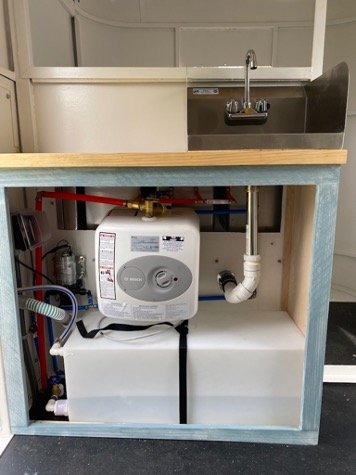
Below is a breakdown of the equipment Bob has used across multiple mobile bar trailer builds. This is based on real installations, not spec sheets, and includes notes on what worked, what to watch out for, and how to make smart choices based on your specific build.
Hand-Washing Sink
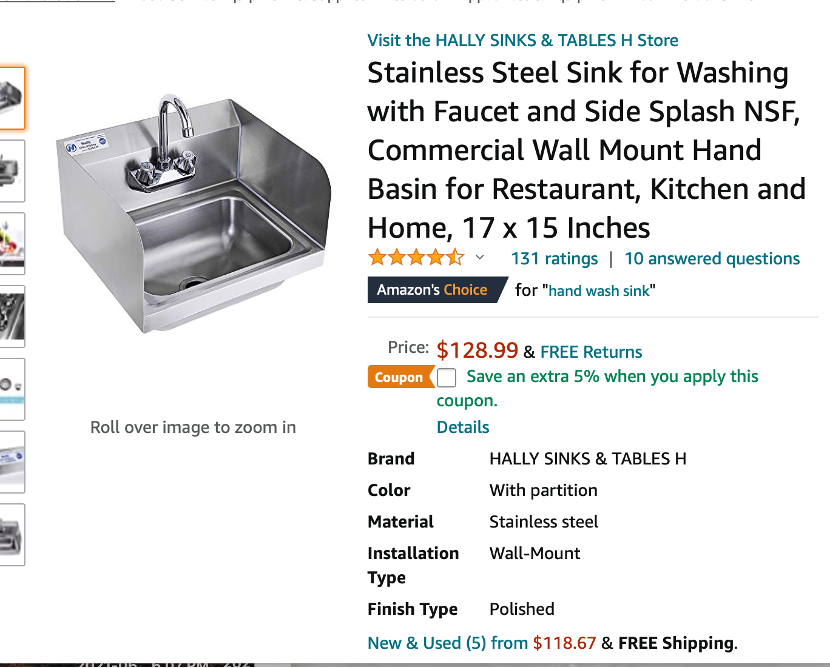
For permitted builds, you'll need a dedicated hand-washing sink separate from your three-compartment wash sink. Bob recommends choosing an NSF-certified sink and leaving the certification label on it for the health department inspector to see. The sink pictured was selected specifically because the code required walls on the sides of the basin since it was being mounted inside a countertop. It came with the faucet included and was a straightforward installation.
Three-Compartment Sink
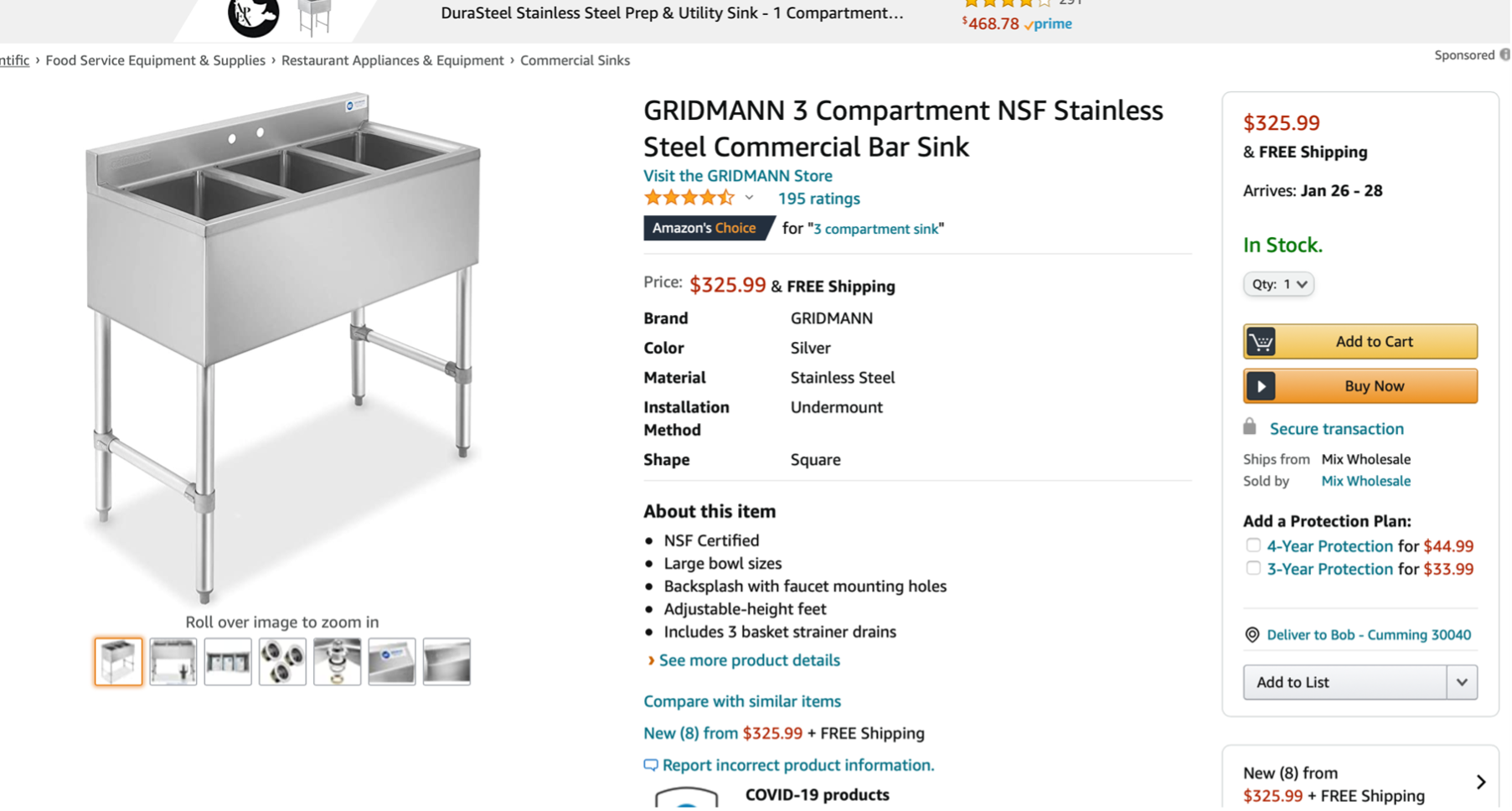
Your three-compartment sink needs to be sized based on what your health department requires, which generally means it needs to be large enough to fit anything you intend to wash during operations. In Bob's New York builds, the health department dictated the minimum basin size. Some jurisdictions also require a drying rack mounted to the side of the sink. Get your local requirements first, then buy the sink. Not the other way around.
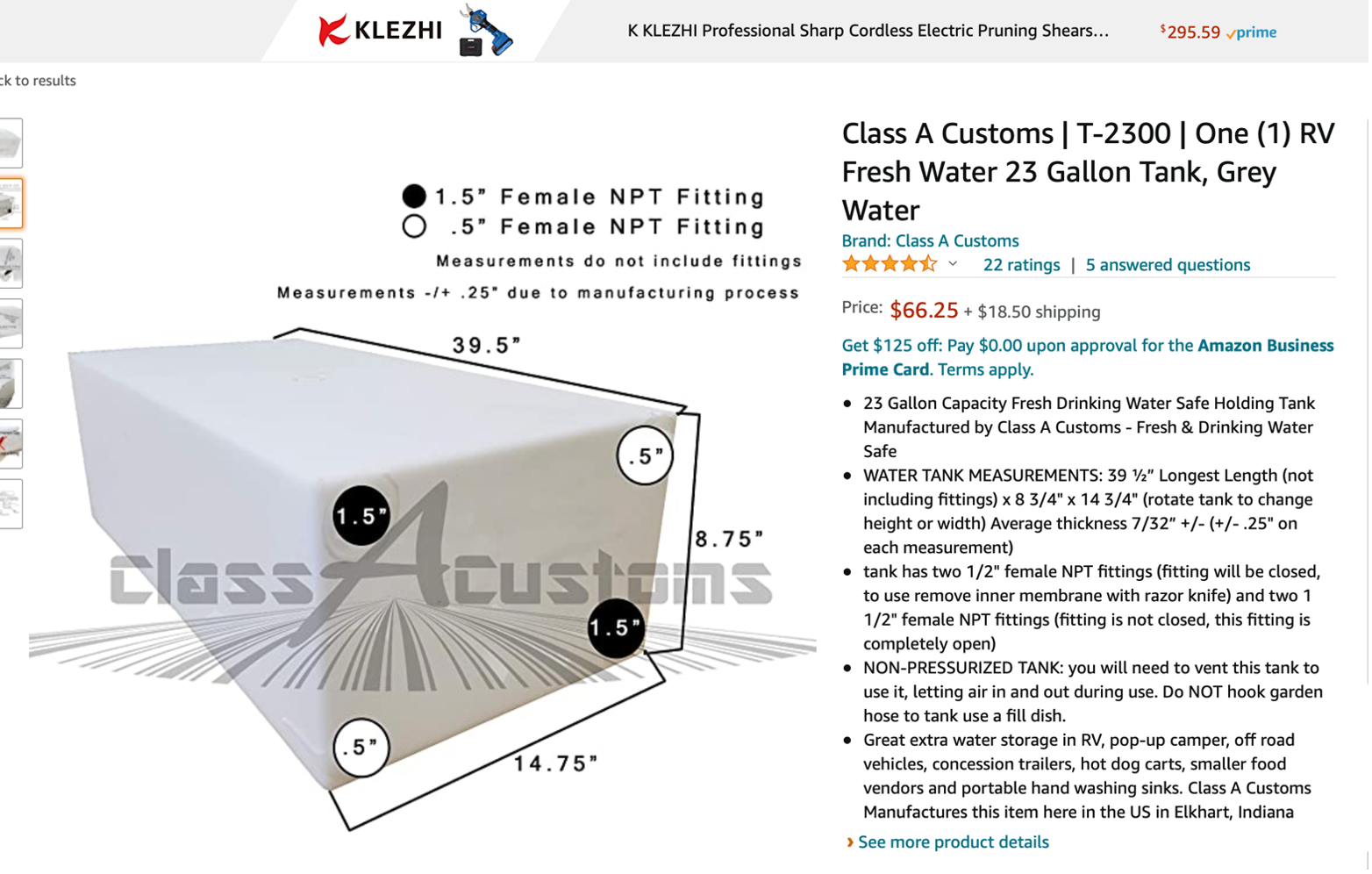
Freshwater & Grey Water Tanks
Bob typically buys combo packs of freshwater and grey water tanks. A few important notes from his installations:
The grey water tank must almost always be larger than the freshwater tank. These tanks usually don't come with a wash-out port (which most health departments require), so you'll need to add one yourself. Bob installs a hatch cover on the grey water tank so it can be cleaned out as required by regulations.
The tanks also don't come with fittings or straps to hold them in place. Both tanks need to be mounted on a slant so they can be completely drained, which is typically a code requirement. Bob builds wooden frames to hold the tanks at the correct angle and uses ratchet straps to secure them inside the frames.
Your choice of tank often comes down to where the fittings are located relative to your plumbing plan. Map out your entire system layout before you commit to a specific tank, so the inlet and outlet positions work with your build.
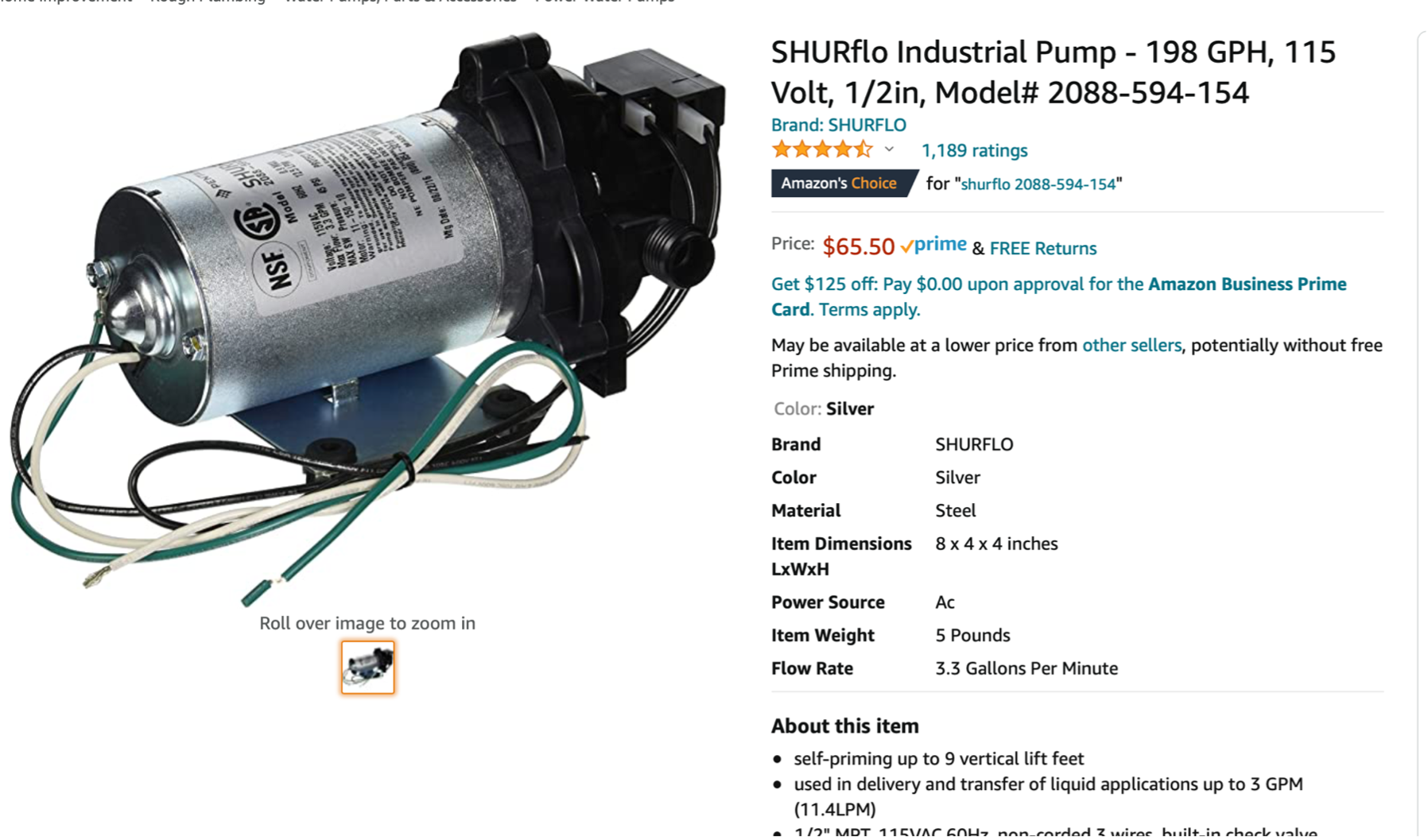
Water Pump
If you're running a full plumbing system (not a gravity-fed or foot-pump setup), you'll need an electric water pump to move water from your freshwater tank through your lines. Bob's installations have been straightforward with standard RV-style water pumps. Match the pump to your system's demand; a hand-washing-only setup needs far less pressure than a full three-compartment sink system.
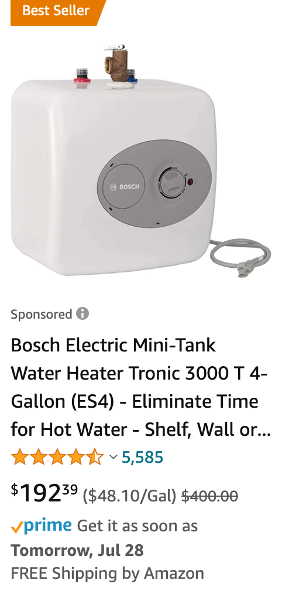
Hot Water Heater
If your health department requires hot water (and most do for permitted setups), you'll need an appropriately sized water heater. Bob uses a 110v electric water heater that measured 165°F after installation, which cleared the 155°F requirement in his jurisdiction. Water heaters come in various sizes; go with the largest unit (by measurement) that will physically fit in the space you've designated for it. You don't want to be short on hot water capacity during a high-volume event.
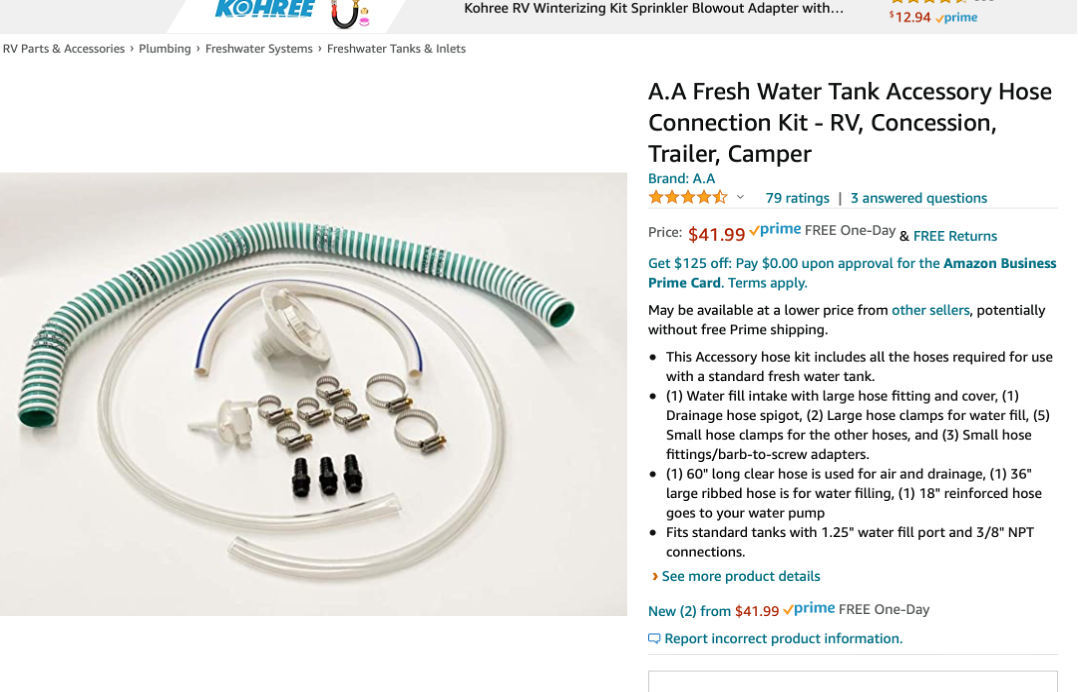
Exterior Fill Port
If you want to fill your freshwater tank from the outside of the trailer (which Bob recommends for convenience), you'll need an exterior gravity fill port kit. Installation involves drilling through the side of the trailer and connecting the port to the inlet of your freshwater tank. This saves you from having to open up the trailer interior every time you need to top off your water.
Plumbing Lines & Fittings
Bob uses PEX tubing and PEX fittings for all water lines in trailer builds, and recommends them specifically for mobile applications. PEX is forgiving in a trailer environment because it handles the movement, vibration, and temperature fluctuations that come with transporting a mobile bar. Rigid copper or PVC connections are more prone to failure in a mobile setting.
All fittings can be sourced from Home Depot or any major hardware store. For a full permitted system with freshwater lines, grey water lines, and hot water lines, expect to use approximately 20 feet of PEX. Bob's total spend on PEX, fittings, and hardware was around $300 for a complete installation.
Installation Considerations You Won't Find Elsewhere
Beyond the individual components, here are the build considerations Bob flags from his experience that most equipment guides completely miss:
Tank placement affects towing safety. We covered this above, but it bears repeating. Plan your tank locations based on weight distribution, not just convenience. The ideal placement balances the load between the front and rear of the trailer and keeps the tongue weight within your hitch rating.
Grey water tank placement can save space. Bob has successfully mounted grey water tanks under three-compartment sinks in several builds, which frees up significant floor space in the trailer for your actual bar operations.
Drainage angles matter. Both tanks need to be mountable at a slant for complete drainage. This means your mounting frames need to be built with this angle in mind from the start, not retrofitted later.
Map your entire system before buying anything. The position of inlet and outlet fittings on your tanks needs to align with your plumbing plan, your sink placement, your pump location, and your water heater position. Buying tanks first and planning later often leads to awkward plumbing runs or expensive rework.
Know your power requirements. A water pump and a water heater both draw power. Make sure your electrical system (whether you're running off a generator, shore power, or batteries) can handle the load, especially if you're also running lighting, refrigeration, or other equipment simultaneously.
What This All Costs
For a full health-department-compliant water system in a mobile bar trailer, here's what Bob's builds have typically come in at:
| Component | Estimated Cost |
|---|---|
| Three-Compartment Sink (NSF certified) | $200–$500 |
| Hand-Washing Sink (NSF certified, with faucet) | $75–$200 |
| Freshwater & Grey Water Tanks (combo) | $150–$400 |
| Water Pump | $50–$150 |
| Hot Water Heater (110v) | $100–$250 |
| Exterior Fill Port Kit | $25–$50 |
| PEX Tubing, Fittings & Hardware | ~$300 |
| Mounting Straps, Frames & Misc. | $50–$100 |
| Total (Full Permitted System) | $950–$1,950 |
A simplified hand-washing-only setup (no three-compartment sink, no water heater, smaller tanks, foot pump) can come in well under $200. Your health department requirements and your operational needs determine where you land on this spectrum.
Final Thoughts | Do Your Due Diligence First
The single most important takeaway from this guide is to know your requirements before you spend a dollar. Contact your local health department. Ask for their specific regulations for mobile beverage service. Find out whether you'll be classified as a food truck, a mobile bar, or something else entirely, because the classification changes the requirements.
Once you know what's required, the actual equipment sourcing and installation is manageable. It's building the wrong thing, or building more than you need, that gets expensive and frustrating.
If you're in the process of building a mobile bar trailer and want expert guidance on the full build process, including water systems, electrical, layout, and compliance, the Mobile Bar Academy covers this in detail. And if you're still deciding whether a trailer is even the right move for your business, check out our guide on how much it actually costs to start a mobile bar business — you might find that you don't need a rig at all to get started.